Throughout the tapestry of human history, there lies an enduring intrigue surrounding the sacred. 🕊️ The profound desire to protect and sanctify sacred writings has been a vital aspect of many ancient civilizations. The ceremonial sealing of these texts not only safeguarded their spiritual wisdom but also infused them with an aura of mystique. In this exploration of ancient art, we delve into the rich traditions that have preserved sacred writings across cultures and eras, revealing a tapestry woven with reverence, artistry, and ritual.

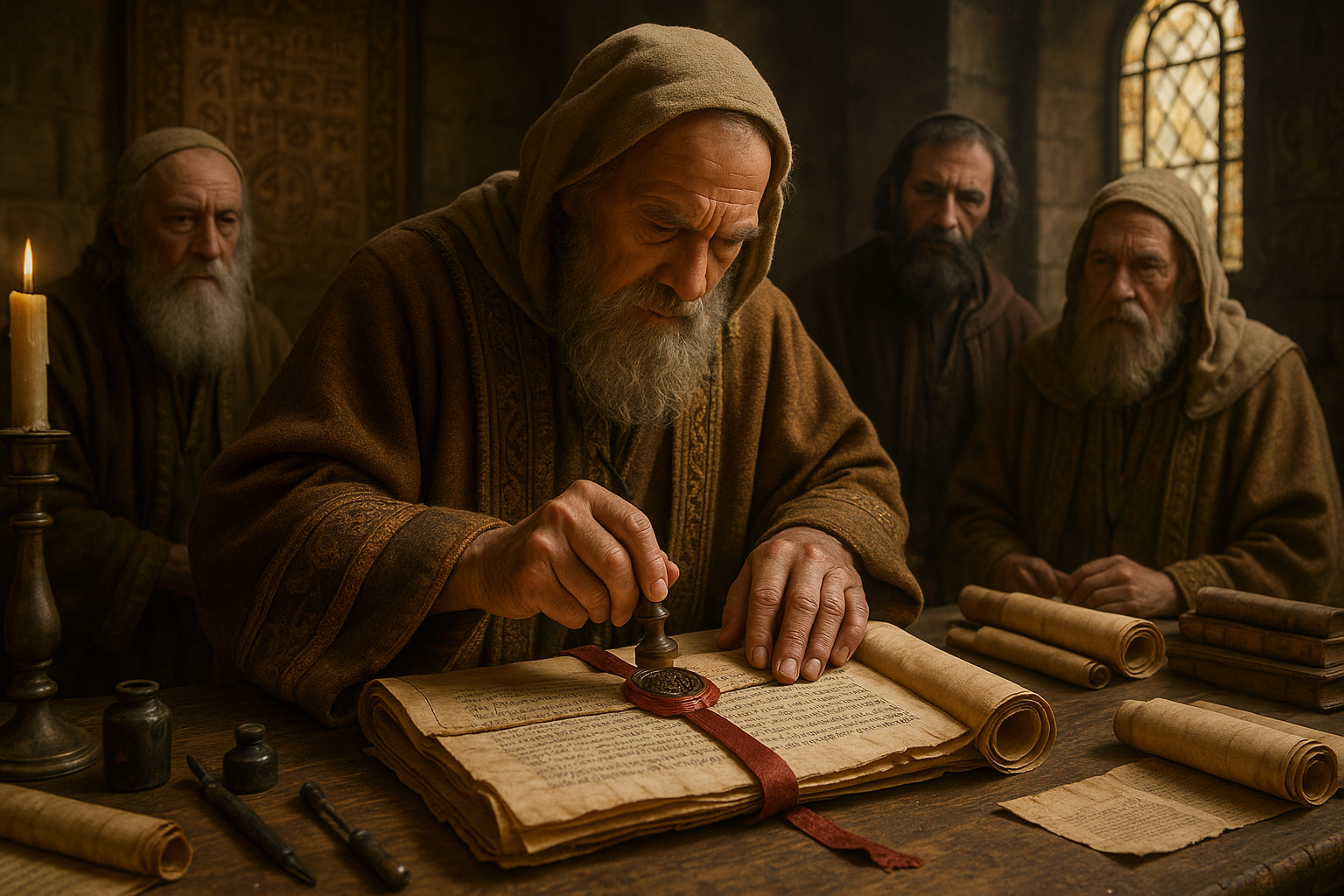
Imagine holding in your hands a scroll that has survived centuries, its edges frayed, yet its core intact. This scroll might have been sealed with wax, clay, or resin, each method holding its own symbolic significance. The act of sealing sacred texts was more than just a physical protection; it was a declaration of the sanctity contained within. But what inspired these ancient cultures to develop such meticulous techniques? What meanings did these seals hold, and how have they influenced the way we perceive sacred texts today?
In the following sections, we will traverse the landscapes of ancient civilizations, from the banks of the Nile to the bustling streets of ancient Rome. Our journey begins with the Egyptians, who were pioneers in the art of sealing sacred writings. They believed that the protection of their spiritual texts was crucial to ensuring the continuity of their religious and cultural identity. The intricate process of sealing these writings often involved rituals that were as sacred as the texts themselves.
Moving from the sands of Egypt, we will explore the Mesopotamians’ contributions to this ancient art. Known for their advanced understanding of writing and record-keeping, the Mesopotamians developed sealing techniques that not only protected their writings but also communicated authority and authenticity. Their seals, often cylindrical and adorned with intricate carvings, were symbols of power and protection, imprinted onto clay tablets with precision.
The journey does not end there. As we venture into the classical world, we encounter the Greeks and Romans, whose sealing practices reflected their evolving understanding of written communication. While the Greeks favored simplicity, their seals often held philosophical meanings, intertwining the physical and metaphysical. The Romans, on the other hand, brought a level of sophistication to the art, integrating elements of politics and power into their sealing techniques. Their seals became a testament to the authority of the document, a legacy that has influenced legal practices to this day.
Beyond the Western world, the art of sealing sacred writings flourished in the East. In China, the use of seals dates back thousands of years, with each dynasty contributing to the evolution of this practice. Chinese seals were not only functional but also artistic masterpieces, each stroke and curve crafted with precision and care. They served as a bridge between the spiritual and the temporal, embodying the harmony between man and the divine.
In India, the tradition of sealing sacred texts was deeply intertwined with religious rituals. The seals used in Hindu and Buddhist traditions often bore symbols of spiritual significance, imbuing the texts with an added layer of holiness. These seals were not merely tools; they were sacred objects in their own right, revered and respected.
As we unveil the ancient art of the ceremonial sealing of sacred writings, we gain a deeper understanding of how these practices have shaped the way we view and protect knowledge today. The methods and symbols used in these ancient practices continue to resonate, reminding us of the timeless quest to safeguard wisdom and heritage. Through this exploration, we invite you to ponder the sacredness of words and the lengths to which civilizations have gone to preserve them.
In the chapters that follow, we will explore each of these cultural traditions in greater detail, examining the techniques, materials, and meanings behind the seals. We will also consider the contemporary relevance of these practices and how they have influenced modern sealing methods. Join us as we embark on this journey through time, discovering the intricate art of sealing that has protected humanity’s most treasured thoughts and beliefs. 📜✨
Conclusion
## Conclusion
The practice of sealing sacred texts represents far more than a simple method of preservation—it embodies humanity’s deepest reverence for divine wisdom and spiritual truth. From the clay envelopes of ancient Mesopotamia to the elaborate wax seals of medieval monasteries, these protective measures served as physical manifestations of a text’s sanctity and authority. The very act of sealing transformed ordinary documents into extraordinary vessels of faith, creating barriers that separated the profane from the sacred and ensuring that only worthy individuals could access the knowledge within. These rituals weren’t merely about keeping texts safe from physical deterioration; they were about maintaining the purity and power of the words themselves, creating a tangible bridge between the earthly and the divine.
What’s particularly fascinating is how these ancient practices continue to resonate in our modern world. Religious communities still employ ceremonial sealing techniques during important occasions, and the symbolism of sealed knowledge appears throughout contemporary spiritual literature and practices. The psychological impact of opening something that has been deliberately sealed—that moment of revelation and responsibility—remains as powerful today as it was thousands of years ago. This enduring tradition reminds us that certain knowledge demands respect, preparation, and intentionality in its transmission.
As we reflect on these ancient rituals, we gain insight into how our ancestors understood the relationship between the physical and spiritual realms. The sealing of sacred texts wasn’t superstition or theatricality—it was a sophisticated theological statement about the nature of divine revelation and human responsibility. These practices challenge us to consider what we hold sacred in our own lives and how we protect and honor those treasures, whether they exist on parchment, in pixels, or within the depths of our hearts.